
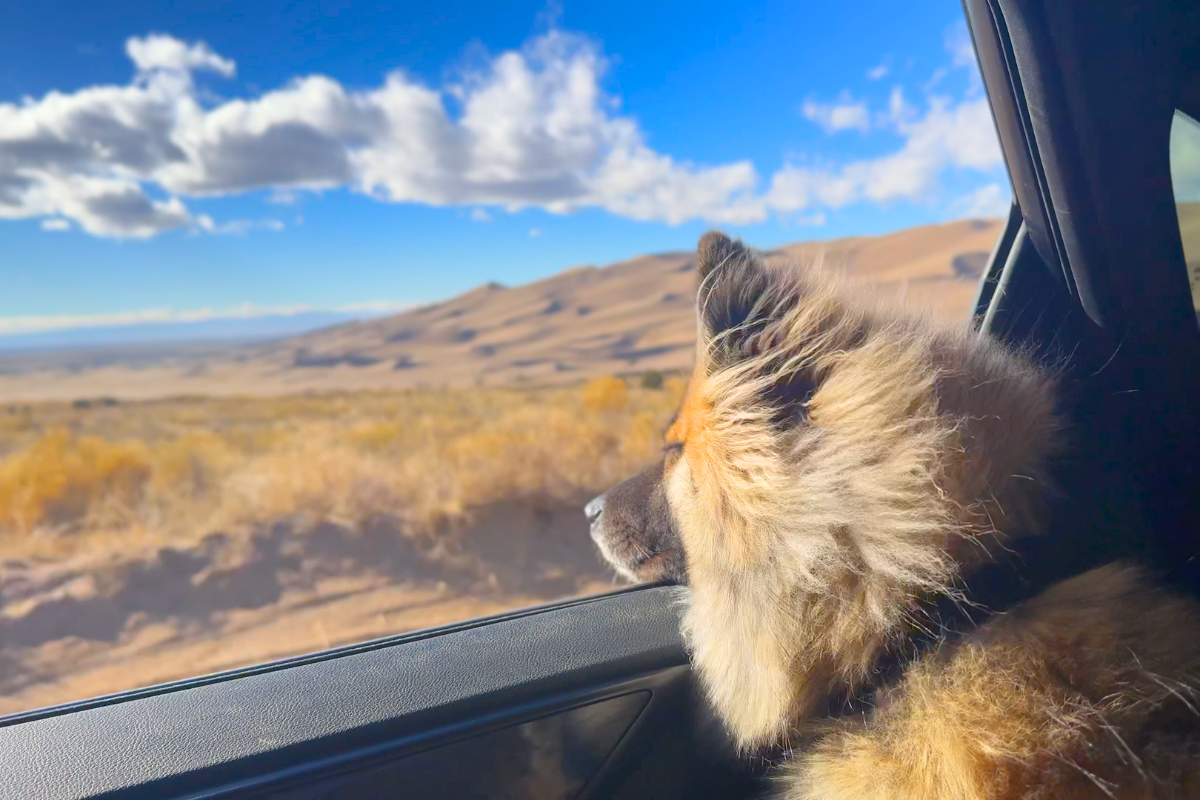
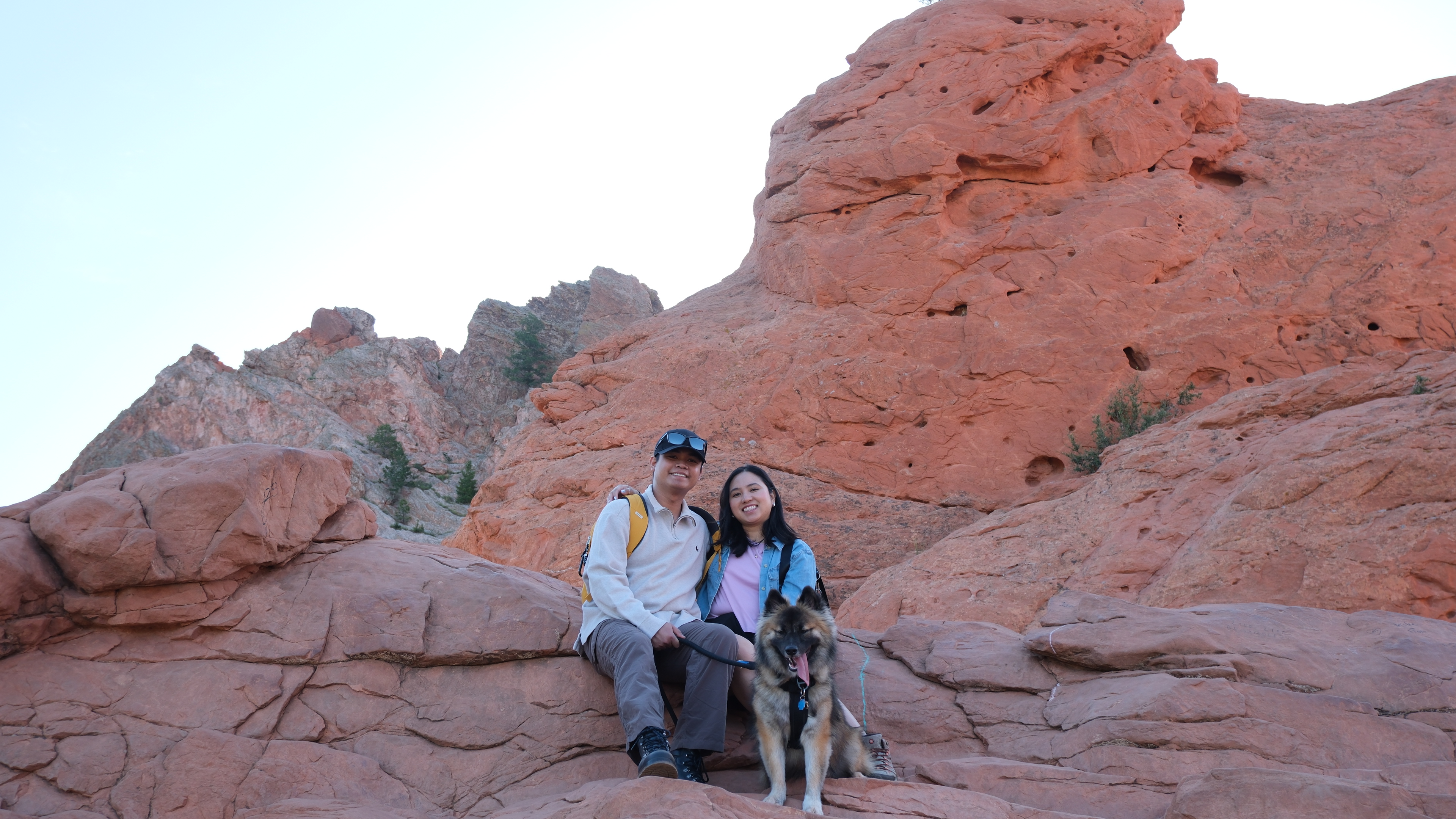
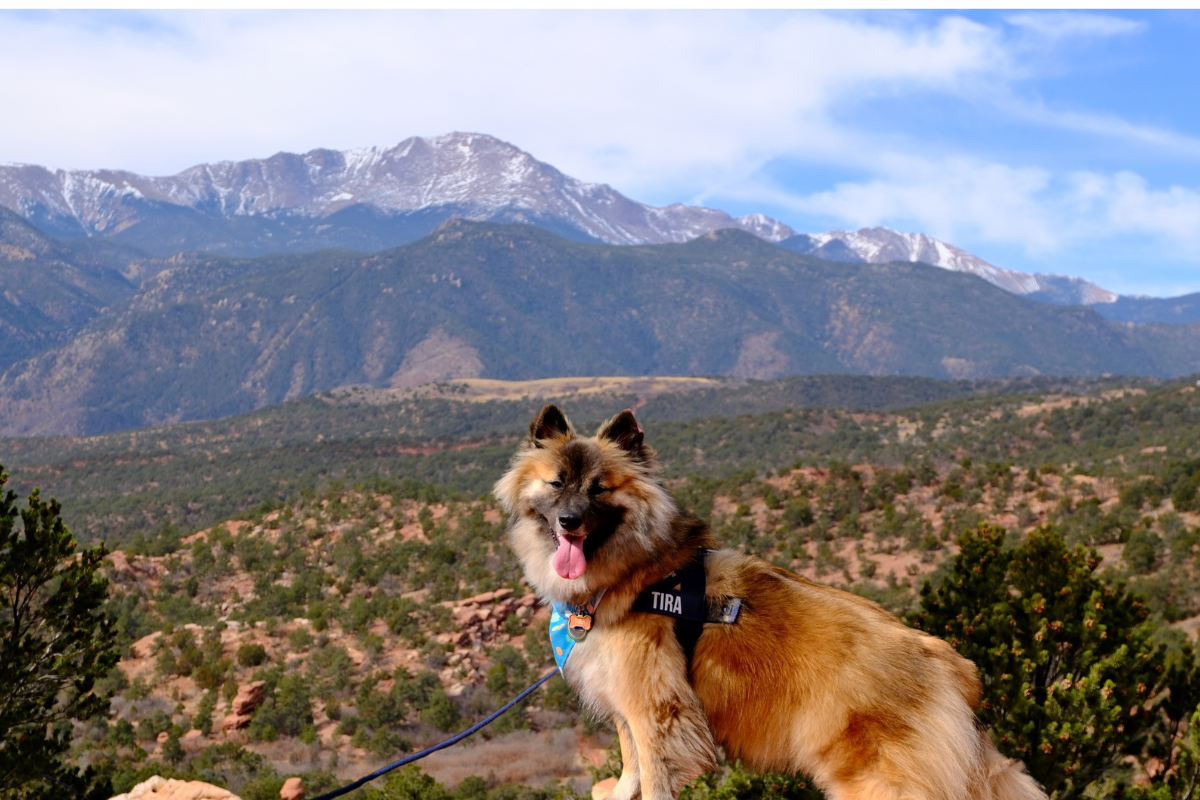
Traveling with Tira has completely changed the way we explore, in the best possible way. He slows us down, forces us outside, and leads us to places we never would have found otherwise. In fact it is more fun with your furry friend. They only get to live a life shorter than we do so we use any chance we have to bring him along. It brings us joy too that he gets to experience and relish in the beautiful places that we are exploring.
If you are thinking about bringing your dog on your next adventure, here is everything we have learned from years on the road together.
Keeping Your Dog Safe and Happy in the Car
An unrestrained dog in a moving vehicle is dangerous for your dog and for you. Getting this right is the foundation of safe dog travel.
Not all dog harnesses are created equal when it comes to car safety. Look for harnesses that have been crash tested, such as the Sleepypod Clickit Sport or the Kurgo Tru-Fit. These connect directly to your car’s seatbelt and are designed to protect your dog in an accident. Tira rides in the back seat where he can see out the window without distracting the driver.

A good waterproof seat cover is non-negotiable if your dog sheds or has a habit of coming back from trails with muddy paws, which is every trail. It keeps your car clean, gives your dog a defined and comfortable space, and makes cleanup after a hike genuinely easy.
Planning Stops and Breaks
Dogs need regular breaks much like we do, and a bored or uncomfortable dog makes the whole car experience harder. I plan driving days around stops every 2 to 3 hours, even if it is just 10 minutes at a rest area or a quick stretch at a trailhead. These breaks also break up the drive for you and often lead to unexpected discoveries.
A car can heat to dangerous temperatures in minutes even on a mild day. If you are stopping somewhere your dog cannot come, take turns so someone stays with your dog or find a shaded spot with water and an open window if you must step away briefly. In warm months we avoid any stop where we cannot bring Tira inside or keep him in a safe shaded outdoor space.
Finding Dog Friendly Accommodation
Not all pet friendly hotels are actually welcoming to dogs. BringFido lets you filter by pet policies, read reviews from other dog owners, and see which hotels have dog amenities like dog beds, bowls, and nearby walking areas. Always read the reviews specifically from guests who brought dogs since the experience can vary wildly from what the listing claims.
We typically search accommodation on Vrbo and make sure that we select traveling with pets. It will include the pet fee. You can also search on Expedia, Trip.com, and Hotels.com, Airbnb.

Camping is hands down the most dog friendly accommodation option. Most campgrounds allow leashed dogs, there are no pet fees, no weight limits, and your dog gets to sleep under the stars. Hipcamp is great for finding dog friendly private land camping with unique settings. Just check the specific campground rules for any trail or beach access restrictions.
Finding Dog Friendly Trails and Parks
Dog policies vary dramatically between trails, parks, and public lands. National Park trails are often off limits to dogs except on paved surfaces and campground areas. State parks are usually more welcoming. BLM and National Forest land typically allows dogs on leash on most trails. Always check the specific rules for any trail before you load up and drive to the trailhead. If you are coming to Colorado do not forget to make a stop at one of the most pet friendly national parks at The Great Sand Dunes National Park, just make sure to read all rules and ensure your pup will be safe because it gets hot in the summer.

Not every trail is appropriate for every dog. Consider the terrain, the distance, the elevation gain, and the surface type. Rocky scrambles can be hard on paw pads. Hot pavement in summer can cause burns. Tira is an active dog but we still choose trails that match what he can comfortably handle and always check the weather to avoid hiking in peak heat.
Even if your dog has perfect recall, keep them leashed on trails. Most public lands require leashes no longer than 6 feet. This protects wildlife, other hikers, and your dog from unexpected encounters. It also ensures you stay in compliance with local regulations which can carry hefty fines if violated.
Health and Safety on the Road
Before any trip, make sure your dog is current on all vaccinations and on flea and tick prevention. If you are heading into tick country, which includes most trails and forests across the US, this is non-negotiable. Some campgrounds and dog parks also require proof of vaccination. Keep a copy of your dog’s vaccination records in your travel bag.
Before you arrive anywhere, do a quick search for the nearest emergency vet. Save the address and phone number in your phone. We have never needed it but knowing it is there gives enormous peace of mind in remote areas. Also pack a basic dog first aid kit with paw balm, bandages, tweezers for ticks, and any regular medications your dog takes.
What to Pack for Your Dog
Shop Tira’s Amazon Favorites for all our go-to travel gear.
Best Apps and Resources for Traveling with Dogs
Visiting National Parks with Your Dog
National Parks have some of the most restrictive dog policies of any public land. Dogs are generally allowed on paved surfaces, in campgrounds, and in parking areas, but are prohibited from most trails and backcountry areas. Every park is different so check the specific park’s website before your visit. Some parks like Acadia have much more generous dog policies than others.

Flying with Your Dog
Tira has not yet been on a plane but we hope to take him on flights in the future. Air travel with pets is becoming more accessible, whether through commercial airlines or specialized pet friendly services. Here is what you need to know about flying with your dog.
Most major airlines allow small dogs to fly in the cabin if they fit in a carrier under the seat in front of you. This typically means dogs under 17 to 22 pounds including the carrier. Larger dogs must travel in the cargo hold in a climate controlled pressurized area. Alaska Airlines is consistently rated as one of the most pet friendly airlines with reasonable fees starting at $100 each way and accepts dogs, cats, and rabbits. Delta and American Airlines also offer solid in cabin policies though fees are higher at around $150 each way.
For larger dogs or pet parents who want to avoid cargo, K9 Jets offers shared private jet flights where your dog stays in the cabin with you the entire flight. No crates, no size restrictions, and no cargo hold. They operate routes between major cities including New York, Los Angeles, London, Paris, and Dubai. Pricing is premium, typically $3,000 to $6,000 per seat with pet, but for international travel or larger dogs this can be comparable to commercial cargo fees plus the stress and logistics involved. Over 5,000 pets have flown with K9 Jets and more than 95 percent of their flights operate as scheduled.
Traveling with Your Dog Makes Everything Better
Every trip we have taken with Tira has been richer for having him there. He changes how we move through a place, how long we linger, which paths we take, and what we notice along the way. The extra planning is worth every bit of it. And you are just happy to have them enjoying it with you.
Questions about traveling with your dog? Drop them in the comments below.
“Happy planning and wishing you a wonderful trip with your furry friend!”
— Tira

Shop Tira’s Favorites
All the gear we actually use and love for traveling with Tira
Shop Our Travel GearReady to Plan Your Dog Friendly Adventure?
Find pet friendly hotels, vacation rentals, and gear for your next trip





Leave a Reply