
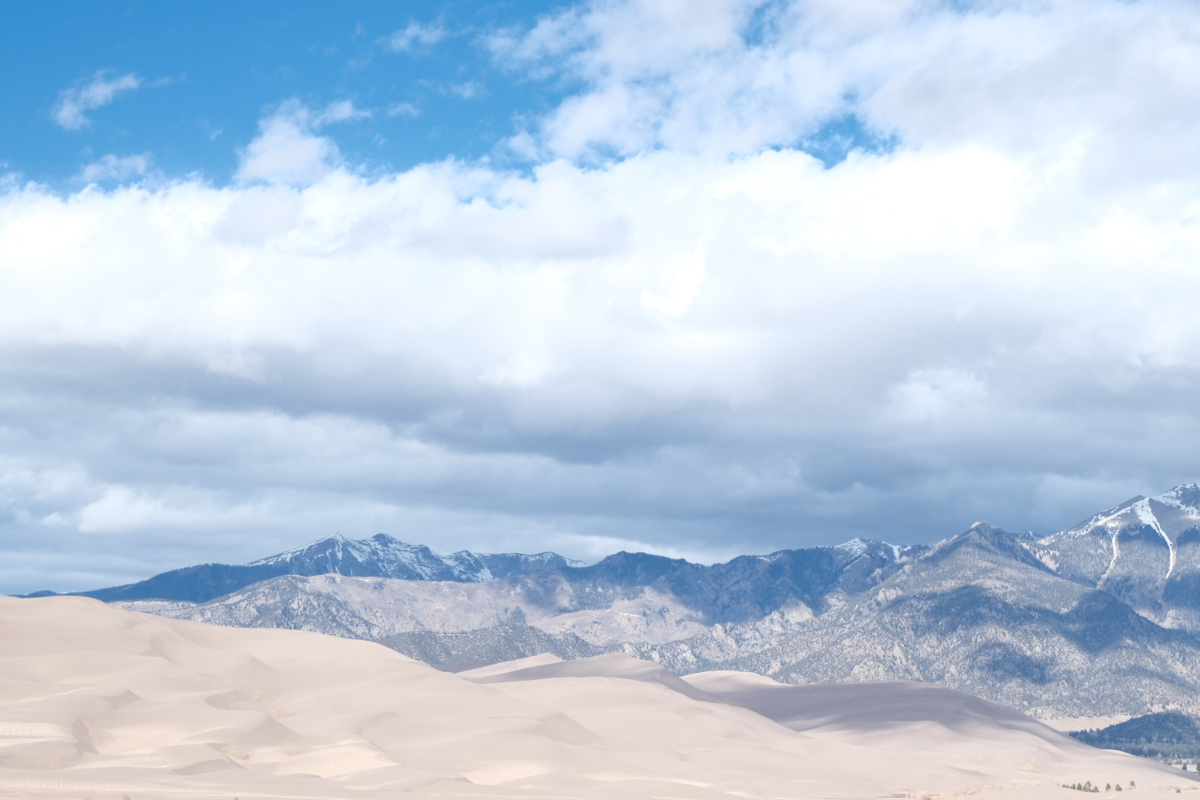
Great Sand Dunes National Park is one of the most dog friendly national parks in the country, and we visited in the middle of January to see it for ourselves. There is something surreal about standing in front of the tallest sand dunes in North America. The dunes rise 750 feet against a backdrop of snow covered 14,000 foot peaks, and the whole scene feels surreal. We brought Tira along for the adventure, and he loved it. The wind was the only challenge, but the views made it worth the visit.
Visiting in winter meant fewer crowds, cooler sand (no burnt paws), and a completely different energy than what you see in the summer photos. If you are looking for a Colorado day trip that feels like nowhere else on earth, this is it.
Planning Your Visit to Great Sand Dunes National Park
Great Sand Dunes National Park is located in southern Colorado, about 4 hours from Denver. The park is open 24 hours a day, 7 days a week, year round, and the best part? No timed entry reservations are ever required. You can show up whenever you want.
The entrance fee is $25 per vehicle and is valid for 7 days, or free with the America the Beautiful Annual Pass.
Visiting Great Sand Dunes with Your Dog
Great Sand Dunes is one of the most dog friendly national parks we have visited. Leashed dogs are allowed in all day use areas of the park, including the main dune field up to the first ridge, the picnic areas, and along Medano Pass Road. Tira had a great time exploring the base of the dunes and posing for photos with the mountains behind him.

In winter, the sand is cool so you do not have to worry about burning paws. If you visit in summer, the sand can get extremely hot, so plan accordingly with booties or visit early in the morning before the sand heats up.
Our Winter Day Trip: What We Did
1. National Park Photo
We grabbed the classic national park sign photo on our way in.

2. The Great Sand Dunes Visitor Center
After that, we stopped at the visitor center. It is located less than a mile from the entrance and has restrooms, interactive exhibits about the dunes and the ecosystem, and a great view of the park from the building itself. Worth a stop to get oriented and learn how the dunes formed before heading out to see them up close.
This is also one of the best spots to get a full photo of the dunes from afar, and they have telescopes set up for a closer look. Do not forget to grab a souvenir while you are there.
Want More Context on the Dunes? A self guided audio tour is a great way to learn the history and geology of the park as you explore. Get the Audio Tour

3. The Sand Dunes
Nothing quite prepares you for the scale of these dunes in person. Photos do not do them justice. Seeing them up close, with the 14,000 foot Sangre de Cristo peaks right behind them, is genuinely one of the most impressive sights in Colorado.
We walked out toward the base of the dunes and spent time taking photos and letting Tira explore. The wind was strong the day we visited, which is common in winter, but it was manageable with layers and it added to the dramatic feel of the landscape. We did not attempt to climb all the way to the top of the dunes, but you absolutely can. There are no marked trails on the dunes themselves, so you just pick a direction and start walking.

If you want a different way to experience them, sand sledding is also an option. We saw a few people doing it while we were there, and it looked like a fun way to make the most of the dunes if you bring the right gear.
We ended the visit with a picnic in the car, because the wind made eating outside a little too adventurous.
4. Zapata Falls
We finished the day with a hike to Zapata Falls, located just south of the park entrance on BLM land. The trailhead sits up on a hill and the parking lot alone is worth the stop because the elevated view of the entire dune field and the Sangre de Cristo Mountains is one of the best panoramic views you will find in the area. Some people say this view is even better than what you see from inside the park itself, and honestly we agree.
The hike to the falls is about 1 mile round trip with roughly 200 feet of elevation gain. The trail itself is not difficult, but in winter be prepared for ice and snow on the path. Zapata Falls is a 25 foot waterfall hidden inside a narrow rock crevice. To reach it, you normally have to wade through a cold mountain stream, but in January the creek was mostly frozen which made access different. Tira came along and did great on the trail.
We did not make it all the way to the falls ourselves. The ice on the trail got too slippery near the end, and we decided it was not worth the risk. Tira came along and did great on the trail otherwise. We will be back to finish this one and get the photo next time.

Optional: Medano Pass Primitive Road
If you have a high clearance 4WD vehicle, Medano Pass Primitive Road offers a different side of the park: 22 miles of deep sand and creek crossings leading to a 10,000 foot pass through bighorn sheep habitat. Open mid-May through late November, and only for properly equipped vehicles. Standard SUVs will get stuck.
Tips for Visiting Great Sand Dunes in Winter
The dunes are open year round and winter visits are completely doable. Here is what to know
Winter Visit Tips
Wind: This was the biggest factor on our visit. Bring layers, a hat, and something to cover your face. The sand blows and the wind is relentless at times.
Temperature: January days can range from the 20s to 40s. Dress in layers and be prepared for it to feel colder with wind chill.
Sand Temperature: In winter, the sand is cool which is great news for dogs. No need for booties or worrying about burnt paws.
Crowds: Minimal in winter. We had plenty of space to explore without feeling rushed.
Medano Creek: The seasonal creek that flows at the base of the dunes is typically dry in winter. If you want to see the famous “surge flow” waves, visit between late May and early June.
Road Conditions: The main park road is paved and generally accessible in winter, but check conditions before you go if there has been recent snow.
Getting to Great Sand Dunes
Great Sand Dunes is in southern Colorado near the town of Alamosa. The drive is straightforward but remote, so fill up on gas before you head out.
From Denver: About 4 hours via I 25 South to Walsenburg, then west on US 160, then north on CO 150.
From Colorado Springs: About 2.5 hours via I 25 South to US 160 West.
For a more scenic route from Denver, take US 285 South through the mountains.
Where to Stay near Great Sand Dunes and Star Gazing
If you want to extend this into an overnight trip, below are your options. Also it is one of the best stargazing spots in Colorado. The park is a certified Dark Sky Park, and the surrounding mountains block out light pollution from the cities along the Front Range, so the sky here gets genuinely dark. We did this as a day trip, but next time we want to stay overnight just for this. If you have the extra time, we would recommend it. Otherwise, a day trip works perfectly fine.
1. Alamosa
The closest town with hotels and restaurants, about 35 minutes from the park entrance. A good base if you want to explore the area over a couple of days. Book your stay on Vrbo or Expedia
2. Camping Inside the Park
Pinon Flats Campground is inside the park, just a 5 minute drive from the dunes. Sites book up months in advance during peak season. Zapata Falls Campground (BLM) is also nearby with 23 sites, open year round. Reserve on Recreation.gov
Best Time to Visit
We visited in January and had a great experience, but each season offers something different:
Winter (December to February): Fewer crowds, cool sand (dog friendly), dramatic lighting. Wind can be strong. Medano Creek is dry. Some higher elevation roads may be closed.
Spring (March to May): Warming temperatures, Medano Creek starts flowing. Wildflowers begin to appear. Still relatively uncrowded.
Summer (June to August): Warmest and most crowded. Medano Creek peaks in late May to early June with the famous surge flow waves. Sand gets extremely hot during the day, so visit early morning or bring booties for your dog.
Fall (September to November): Cooler temperatures, fewer crowds, beautiful light. A great shoulder season option.

Final Thoughts
Great Sand Dunes is one of those places that genuinely surprises you. The scale of the dunes, the contrast with the mountains, and the fact that your dog can come along for the entire experience make it one of our favorite national parks in Colorado. We drove out, spent a few hours exploring, had a picnic in the car, and drove home. Simple, affordable, and unforgettable. It makes for a perfect national park Colorado day trip.
If you are looking for a Colorado national park that welcomes dogs and does not require reservations or permits, this is the one.
Be a Good Steward of the Trail
These places are beautiful because people before us took care of them. Pack out everything you bring in, stay on marked trails, do not disturb wildlife, and leave every spot better than you found it. If you see trash on the trail, pick it up. The mountains give us so much. The least we can do is take care of them in return.
Keep Exploring
You Might Also Like
Everything you need to pack for a pet friendly road trip, from snacks and gear to must-have items for your pup. Sign up below to get it free.
Free Download
Get the Free Printable Road Trip Checklist
It is completely free. Just drop your email below and we will send it straight to your inbox. Check off what you already have, shop what you still need, and hit the road completely ready.



Leave a Reply